
Cognitive Dissonance: Using Discomfort as a Tool for Self-Awareness
/
By Anne Decore, lmft
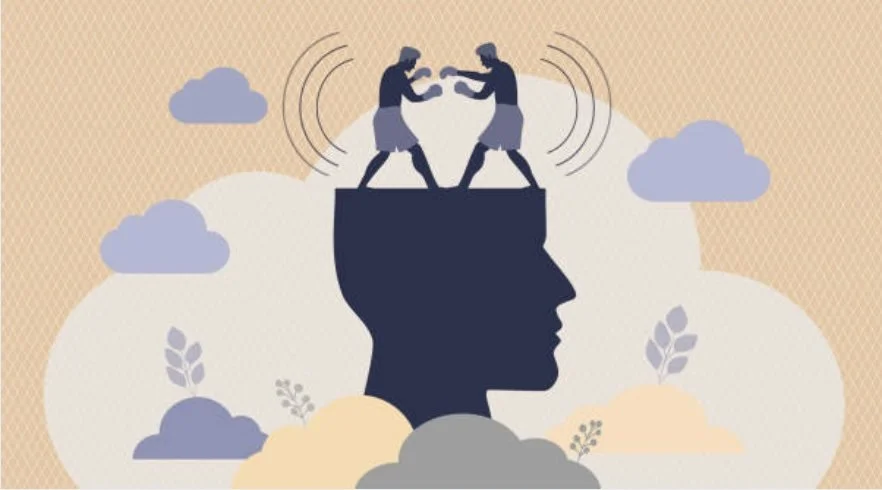
Have you ever done something that didn’t quite align with your values? Then did you find yourself quickly explaining it away? That uncomfortable tension is known as cognitive dissonance, a concept first introduced by psychologist Leon Festinger. Cognitive dissonance refers to the mental discomfort we feel when our beliefs and behaviors don’t match.
Because this discomfort is unpleasant, we’re naturally motivated to reduce it. Research shows that we often do this not by changing our behavior, but by changing the story we tell ourselves.
Consider a common example: someone who values being financially responsible but makes an impulsive purchase. The dissonance between “I’m careful with money” and “I just spent this without much thought” creates discomfort. Instead of sitting with that tension, the mind may step in with a quick justification. “It was on sale,” or “I’ve been working hard, I deserve this.” The discomfort fades, and the conflict, temporarily, goes unexplored.
If we pause instead of immediately justifying, we may notice two competing truths: “I value being intentional with money” and “I’m feeling depleted and want a reward.” From there, a more aligned choice or outcome can be accessed. Perhaps it looks like delaying the purchase, choosing something smaller, or finding another way to meet the need for relief. Or, it may mean making the purchase—but doing so consciously rather than reactively.
This is the real value of cognitive dissonance: it increases self-awareness. The discomfort becomes a signal that something meaningful is in conflict. Working with cognitive dissonance involves noticing the tension, getting curious about what’s underneath it, and then making a more intentional choice. Research suggests that even small shifts in behavior, when aligned with our values, can reduce dissonance and increase a sense of integrity over time.
Cognitive dissonance isn’t something to avoid or simply tolerate. It’s something to use. When we learn to pay attention to that internal friction, it can guide us toward choices that feel more aligned with who we want to be.