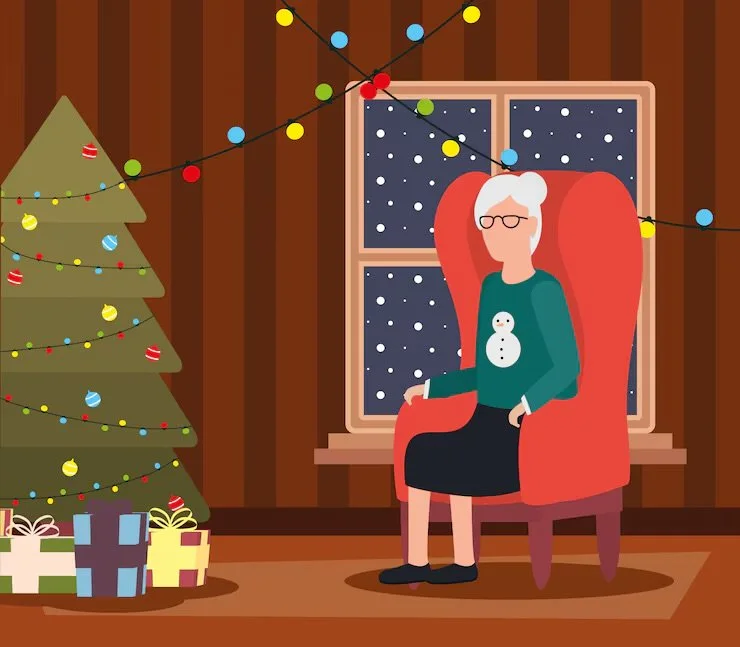
Navigating the Holidays When Someone is Missing

By Caroline Neal, lmft

The holidays bring immense pressure to "be joyful," but when you are grieving, this expectation can collide with your reality. If you are dreading the weeks ahead, please know that your feelings are valid. This season is not about getting over your grief, but about finding practical ways to manage it while navigating the constant reminders of your loss.

Anticipating and Managing Triggers

Grief is intensified by the rituals and traditions of the season. Knowing the common triggers can help you prepare:

Sensory Overload: Be mindful of specific scents, songs, or sights that instantly transport you back to painful memories.

The "Firsts": The first time you experience a key holiday event (dinner, gift exchange) without your loved one will likely be the hardest; be extra gentle with yourself on those days.

Social Pressure: Anticipate difficult questions from well-meaning relatives and have a simple, planned response ready.

Essential Strategies for Self-Protection

Your primary goal is to conserve your emotional energy and practice self-compassion.

Practice the Power of 'No': You don't owe anyone an explanation or your presence. Limit attendance at events or skip painful traditions entirely.

Plan Your Escape Route: Drive yourself so you can leave an event when you need to. Identify a Grief Buddy who knows you might need a brief retreat or a distraction.

Schedule Your Grief: Designate specific time slots each week to intentionally look at photos, cry, or feel sad. This prevents the grief from ambushing you during social events.

Allow Joy Without Guilt: If you laugh or feel a moment of peace, accept it. Joy is not a betrayal of your loved one; it is a necessary emotional reprieve.

Honoring and Remembering

Instead of trying to ignore the absence, create new rituals that actively honor your loved one's memory.

Create a Tribute: Place a candle, a favorite object, or a photo on the table to acknowledge their place and absence.

Share a Memory: Dedicate a few minutes during a gathering for family members to share a short, positive memory of the person who is missing.

Act of Service: Transform sadness into tribute by making a donation or volunteering for a cause your loved one cared about.

Seeking Support

If the emotional weight feels overwhelming, remember that seeking help is a sign of strength. Therapy offers a safe space to process complex emotions and helps you distinguish between normal grief and complicated grief, ensuring you get the support needed to navigate the intensity of the season.

This holiday season, give yourself permission to be exactly where you are.

If you're finding the emotional burden too heavy to carry alone, please reach out to schedule a time to talk.

Grief is like a Tail

By Kayla Harris, MA, AMFTPhoto by Liza Summer from Pexels

By Kayla Harris, MA, AMFT

Photo by Liza Summer from Pexels

I often think of grief like a tail.
Ever-present to you, but invisible to others.

When you experience a tough loss, your tail may feel prickly and sore all the time.

It is always on your mind just how much it pains you, how much it keeps you from enjoying your life.

Every once in a while, you pinch it in a door behind you or someone steps on it.

And it's not their fault; they did not know it was there because they cannot see it.

And yeah, maybe you've mentioned that you have this tail and that it throbs (around the holidays, for example).

However, other people will forget that it is there and will still ask you things like, "What are you doing for Father's/Mother's Day?" and OUCH.

Even people who care deeply for you will do this.

The thing is, they do not have to live with your tail or make space for it, so they'll quickly forget you have to go through life with it.

Other people trip on it and step on it, songs and movies will play that will remind you of hurts, even your mind will replay memories that bring everything back.

In those moments, it may feel like a part of you was just jammed in a car door or like you bumped your head on a low ceiling.

It's as if the central nerve of your tail is tied directly to your heart, throat, or tear ducts.

You may act out in anger or sadness that onlookers won't immediately understand.

The trick is to acknowledge when your tail is hurting and share your feelings with someone you trust.

The more you talk about your losses and how they've impacted you, the more resilient your tail becomes.

What starts as raw and scabby later becomes soft and durable.

As the losses pile on over the years, your tail may feel fresh and vulnerable all over again.

Still, when you care for yourself and make room for the aches, you may be comforted in feeling your grief tail as a part of you and not all of you.

How To Better Cope (And Help) In Today’s Climate Of Tragedy And Fear

By Sasha Taskier, AMFT

By Sasha Taskier, AMFT

In the wake of Sunday night’s shooting in Las Vegas, we are reminded (again) of the fragility of life and the senseless acts of hatred and violence that plague our country and our world. It feels overwhelming to wrap our heads around another tragedy, especially just on the heels of the devastation in Texas, Mexico City and Puerto Rico (and beyond). Between these catastrophic natural disasters and terrifying acts of terrorism, we are living in a climate of fear that can wreak havoc on our emotional wellness and mental health.

Here are a few thoughts and recommendations for how we can better navigate this difficult time:

ACKNOWLEDGE YOUR EMOTIONS

It may feel like the only option right now is to push through and ignore your thoughts and reactions to recent events. Often, when we ignore our feelings, they get worse, or they can manifest elsewhere in our lives.

Take stock of how you are feeling; it may be easy to identify the emotions you’re experiencing, but it may also be really difficult. It is common to experience multiple feelings at once, a constant switch between emotions, and even an overall sense of numbness. There is great power in naming our emotions – once we have a name for them, we can identify them more readily when they surface and then we can more calmly and better manage our symptoms.

If you have experienced a trauma or loss in your life, this news might be especially triggering for you. There is a particularly higher risk of feeling a sense of despair, helplessness, anger and grief– even if this event is in no way connected to your own experience. (There are links to both the disaster distress hotline and crisis hotline at the bottom of this post, should you need them.)

Other symptoms you may be experiencing around this event are increased irritability, loss of sleep, reduction in appetite and loss of focus. Pay attention to yourself and your body – if these are happening to you, it is your body’s way of saying you may need to seek professional help, and take some time to take care of yourself.

MANAGE YOUR MEDIA INTAKE

Many of us may feel guilty turning off the news, or choosing not to watch the footage of the most recent shooting. We may feel obligated to stay informed and force ourselves to see what is happening; in doing so, we hope to increase our understanding of the situation and our compassion for those who were affected. While I think it is a worthy effort to remain engaged and continue practicing empathy for those who are suffering, overdoing this media exposure can lead to increased anxiety, traumatization, and even a re-triggering experience.

Limit your media; tune in occasionally in order to stay engaged and informed, but do not feel bad turning off your twitter feed or closing your computer for some time. You are not disengaged or unfeeling if you decide not to watch this footage; (there are plenty of ways to remain engaged without exposure to such horrific visuals.) It is imperative to create boundaries to protect your mental health and to respect your own limitations.

(I so appreciate these wise words on consuming media, from Brené Brown.)

EMBRACE CONNECTION

Reach out to friends and family. We are creatures of connection – and in times of threat and despair, we sometimes need to embrace our inner ‘pack animal.’ No, you do not need to talk about the event if that feels un-welcomed – but you can share your feelings, share good news and continue to focus on joy. Remember, joy is an act of resistance, especially in the face of hatred.

Additionally, if you know someone who may not have family or friends nearby, reach out to them: invite them for coffee or have them over for dinner. Even something as simple as a text to tell someone you are thinking of them and hoping they are ok, means more to them than you realize. No one should have to feel alone during such a scary and uncertain time.

HELP OTHERS

Helping others counteracts the stress hormones in our bodies. There are countless ways to help and they do not necessarily have to be related to the shooting in Las Vegas. You can donate to relief efforts in Houston, Mexico City and Puerto Rico.

Donate to the Red Cross and Other amazing relief organizations to consider

You can turn towards your local community and find a volunteer opportunity nearby. Connecting and helping in person may feel especially rewarding.

If you’re in Chicago, this is a great resource: https://www.chicagocares.org/

If you are feeling compelled to turn your attention towards gun reform you can check out these organizations to see how you can become involved:

      -  The Coalition to Stop Gun Violence: https://www.csgv.org/

      -  Every Town for Gun Safety: https://everytown.org/

      -  Moms Demand Action: https://momsdemandaction.org/

And of course, you can contact your representatives to tell them your feelings about passing comprehensive and common sense gun reform in the wake of Sunday’s tragedy.

       -  Here is a useful script to help guide your words and guide for reaching outI’ve used the ‘ResistBot’ and found it to be an unbelievably                easy and fast way to contact mySenators and Congressmen about issues I care about. Text RESIST to 50409.

Additional Resources & Articles:

Disaster Distress Hotline:  1-800-985-5990 – Text: TalkWithUS to 66746 – Website

Crisis Hotline: 1-800-273-8255 - Website

Psychology Today

Huff Post Blog

Mashable