Why You Feel Drained, Even After Doing Nothing

By Olivia Grossklaus, amft

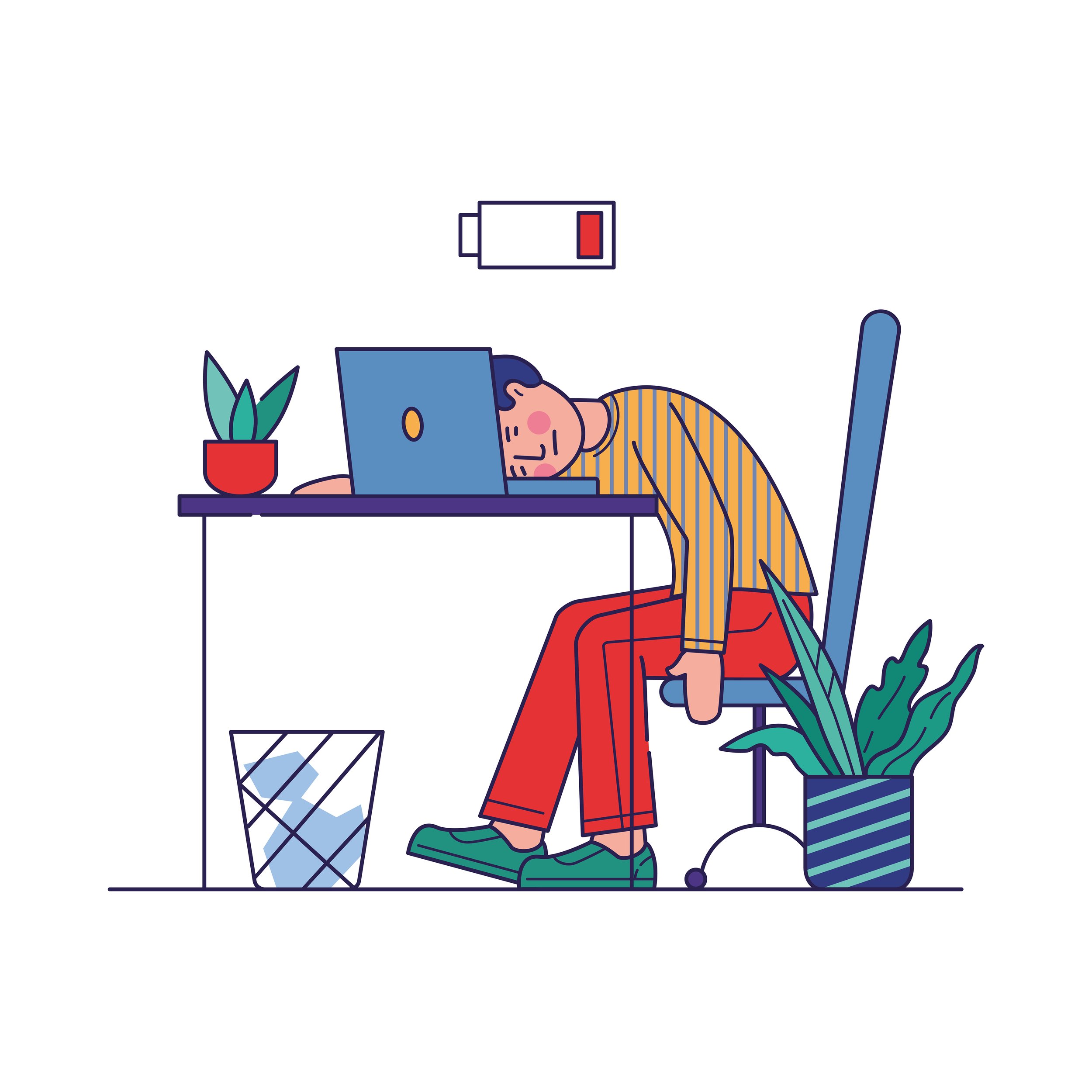
Have you ever had a day where you didn’t do much, yet still ended it feeling completely

exhausted? It can be confusing and even frustrating. If you weren’t physically busy, why do you

feel so drained?

The answer is often that rest isn’t just about what you do with your body but also about

what’s happening in your mind and nervous system.

Mental and emotional load plays a huge role in fatigue. Even when you’re sitting still, your brain

may be working overtime: replaying conversations, worrying about the future, managing stress,

or staying constantly alert. This kind of background mental activity can be just as tiring as

physical work, if not more so.

Another factor is chronic stress. When your body spends long periods in “fight or flight” mode,

it uses a lot of energy. Over time, this can leave you feeling worn down, foggy, or heavy,

regardless of how productive your day looks on the surface. You might not feel stressed in an

obvious way, but your nervous system hasn’t fully relaxed.

There’s also a difference between passive rest and restorative rest. Scrolling on your phone,

binge-watching shows, or zoning out can feel like rest, but they don’t always allow your mind or

body to truly reset. In some cases, they add more stimulation instead of relieving it.

Feeling drained can also be a sign that you’re emotionally carrying a lot, such as responsibilities,

expectations, unprocessed feelings, or the pressure to “hold it together.” Emotional energy is real,

and when it’s depleted, your body notices.

If this resonates, it doesn’t mean you’re lazy or broken. It means you might need a different kind

of rest: quiet, boundaries, movement, time outside, or moments where you’re not performing or

consuming anything at all.

Sometimes, doing “nothing” isn’t enough. Your system needs safety, softness, and space, and

listening to that need is a form of care.
Navigating the Holidays When Someone is Missing

By Caroline Neal, lmft

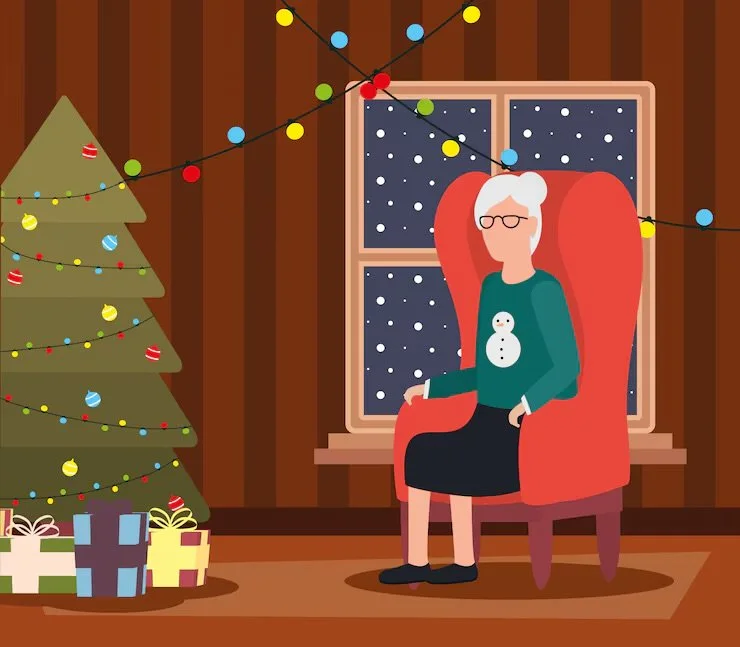
The holidays bring immense pressure to "be joyful," but when you are grieving, this expectation can collide with your reality. If you are dreading the weeks ahead, please know that your feelings are valid. This season is not about getting over your grief, but about finding practical ways to manage it while navigating the constant reminders of your loss.

Anticipating and Managing Triggers

Grief is intensified by the rituals and traditions of the season. Knowing the common triggers can help you prepare:

Sensory Overload: Be mindful of specific scents, songs, or sights that instantly transport you back to painful memories.

The "Firsts": The first time you experience a key holiday event (dinner, gift exchange) without your loved one will likely be the hardest; be extra gentle with yourself on those days.

Social Pressure: Anticipate difficult questions from well-meaning relatives and have a simple, planned response ready.

Essential Strategies for Self-Protection

Your primary goal is to conserve your emotional energy and practice self-compassion.

Practice the Power of 'No': You don't owe anyone an explanation or your presence. Limit attendance at events or skip painful traditions entirely.

Plan Your Escape Route: Drive yourself so you can leave an event when you need to. Identify a Grief Buddy who knows you might need a brief retreat or a distraction.

Schedule Your Grief: Designate specific time slots each week to intentionally look at photos, cry, or feel sad. This prevents the grief from ambushing you during social events.

Allow Joy Without Guilt: If you laugh or feel a moment of peace, accept it. Joy is not a betrayal of your loved one; it is a necessary emotional reprieve.

Honoring and Remembering

Instead of trying to ignore the absence, create new rituals that actively honor your loved one's memory.

Create a Tribute: Place a candle, a favorite object, or a photo on the table to acknowledge their place and absence.

Share a Memory: Dedicate a few minutes during a gathering for family members to share a short, positive memory of the person who is missing.

Act of Service: Transform sadness into tribute by making a donation or volunteering for a cause your loved one cared about.

Seeking Support

If the emotional weight feels overwhelming, remember that seeking help is a sign of strength. Therapy offers a safe space to process complex emotions and helps you distinguish between normal grief and complicated grief, ensuring you get the support needed to navigate the intensity of the season.

This holiday season, give yourself permission to be exactly where you are.

If you're finding the emotional burden too heavy to carry alone, please reach out to schedule a time to talk.

Practicing Gratitude in All Seasons

By Bree Nussbaum, amft

Amongst the many challenges that each of us face daily, gratitude is one of the best ways to combat anxiety, depression, stress and other difficulties. However, when in the middle of difficult situations, it can be challenging to find something to be thankful for. Keep in mind that practicing gratitude is exactly that– a practice. It takes time and different approaches to develop and strengthen the “gratitude muscle.” It might be worth your while to practice gratitude because gratitude is proven to improve sleep, physical health and psychological health, while simultaneously increasing empathy, social connection, self esteem and resilience. 

With practice and intention, gratitude can gradually become more of a natural response over time. The following are different ways it can become part of your day, week or month. Start with what frequency feels right to you and build upon the habit. 

  • One Thing From the Day: Over the course of a month practice slowing down and noticing one thing that you are thankful for. Even at the end of a hard day you can likely find one thing that brings up gratitude. Eventually challenge yourself and start naming 2 or 3 daily events you are grateful for.

  • Fill up a Gratitude Jar: Grab an empty container and fill it with notes of thankfulness. Whenever something makes you feel gratitude write it down and watch the jar fill up over time. When feeling down, go through the jar and reflect on the goodness in your life.

  • Journaling Prompts: When reflecting on gratitude, consider writing in a journal answering specific questions. What is a memory you are grateful for? How have you overcome a challenge recently? Perhaps you are most grateful for your home or putting a meal on the table. Why are you grateful for those things? 

  • Connecting with others: Are you grateful for your family or a friend? Express this to each family member and why you are specifically grateful for them by sending a quick text, giving them a call or writing a handwritten note. 

  • Reflecting on the emotion of gratitude: While practicing gratitude, notice how this feels in your body. What other emotions does it bring up? Notice the positive emotions and changes in your mood.

  • Reflecting on what could be missing: Sometimes, imagining if you did not have what you are grateful for can be a helpful way to elicit thankfulness or appreciation. Perhaps you imagine not having your home, food to eat, family or a close friend. Taking time to sit with this perspective can increase gratitude.

Although Thanksgiving is around the corner, gratitude does not have to end once the holidays come and go. Gratitude is a year round practice with a multitude of benefits. Challenge yourself and a friend to practice gratitude during this season and into the new year. Happy Holidays! 

Breakups & the Brain: Why Heartache Feels Like Withdrawal

By Anne Decore, lmft

If you've ever felt like a breakup knocked the wind out of you—physically, emotionally, and mentally—you're not imagining it. Neuroscience shows that romantic love, especially in its intense stages, activates the same brain pathways as addiction. So when a relationship ends, our brains can go into a kind of withdrawal, eerily similar to what someone might experience coming off a drug.

Love as a Neurochemical High

Studies using fMRI brain scans, such as those by Dr. Helen Fisher at Rutgers University, have found that romantic love activates the brain's reward system—especially areas rich in dopamine, like the ventral tegmental area (VTA) and nucleus accumbens. These are the same regions that light up in response to substances like cocaine or nicotine.

When love is lost, those same brain circuits crash. In a 2010 study published in the Journal of Neurophysiology, Fisher and her colleagues found that people who had recently been dumped showed increased activity in areas of the brain associated with craving and addiction. The brain keeps expecting another “hit” of the loved one, even when they're gone.

Why It Hurts So Much

Beyond dopamine, other neurochemicals like oxytocin (the bonding hormone) and vasopressin are also involved in forming deep attachments. When these are suddenly absent, the brain’s equilibrium is disrupted. This can lead to physical symptoms—insomnia, loss of appetite, anxiety—and a strong urge to reconnect, even when the relationship was unhealthy.

In short: your brain is not just being dramatic. It’s going through something real. Knowing this can help us normalize the depth of distress after a breakup—and plan for recovery with intention. Here are a few therapist-recommended strategies to support your brain during a breakup.

1. Practice Dopamine Hygiene

Engage in activities that naturally boost dopamine: physical movement, especially cardio; small creative tasks; sunlight; and connection with safe people. Avoid excessive scrolling, substances, or other "quick fix" behaviors that may worsen the crash long-term.

2. Lean on Routines

Structure and routine are grounding to a dysregulated brain. Eat nourishing meals, hydrate, sleep consistently, and create rhythms to your day—even when you don't feel like it.

3. Limit Contact (Even Digitally)

Staying in contact with an ex—through texting, social media, or even old photos—can prolong the withdrawal cycle. Creating distance allows the brain to begin rewiring and rebalancing.

4. Reach for Co-Regulation

We are wired to heal in connection. Spend time with friends who can tolerate your grief without needing to fix it. Even gentle presence—watching a movie together or going for a walk—helps calm the nervous system.

5. Name the Process

Clients often feel ashamed of how "obsessed" or "irrational" they feel. But once we understand that the brain is going through a form of withdrawal, we can offer ourselves more compassion. Labeling it as such can reduce shame and increase agency.

Bottom line? Breakup pain is not a weakness—it’s a neurochemical process. With care, patience, and good support, the brain can heal. And in time, it can even love again.

If you're navigating the emotional aftermath of a breakup, therapy can offer a space to understand your brain and heart—and support both in healing.

Recognizing PTSD and the Path to Recovery

BY BREE MINGER, AMFT

As we honor those who have served and continue to serve this Veterans Day, it is important to discuss a diagnosis that impacts many people, especially veterans. Post Traumatic Stress Disorder, commonly referred to as PTSD, impacts about 6% of the U.S. population. The disorder is even more likely to impact veterans. According to the Department of Veteran Affairs, 23% of veterans using VA healthcare will experience PTSD at some point in their lives. PTSD is much higher among veterans using VA healthcare because every veteran is screened for PTSD. Not every veteran uses VA healthcare, and many circumstances for civilians can result in PTSD; therefore, there are likely many people struggling with PTSD and going unnoticed in civilian healthcare. A friend or family member of yours may be grappling with symptoms of PTSD, regardless of military service.

What To Look For

Deployment, intense accidents, sexual assault, natural disaster, death of a loved one and countless other situations can result in PTSD symptoms for veterans and civilians. Symptoms can have lasting impacts on mental health, relationships and lifestyle. Here is what to look for: 

  1. Intrusions: Involuntary memories like nightmares or flashbacks may feel so real, it is as though someone is re-living that moment. 

  2. Avoidance: Perhaps they never want to go to a certain restaurant, or they don’t want to go for a bike ride. Avoiding activities, objects, places, or people related to a stressful and traumatic event may be a form of coping to forget and avoid how they felt during that time. 

  3. Dark thoughts or emotions: experiencing lower mood, feeling angry, numb, guilty, shameful, or difficulty trusting others. These changes in mood can also result in feeling detached from others or much less interest in previously enjoyable activities.

  4. Hyperarousal: They may feel on edge or easily startled. It may result in poor sleep, difficulty concentrating, irritability, or angry outbursts.

Most of these symptoms naturally occur within days after a traumatic event. In order to be diagnosed with PTSD, the above symptoms must occur for a month or longer and the symptoms must be significantly impacting the person’s functioning in daily life. If you notice these symptoms in yourself or a friend, it will be helpful to seek treatment. 

A PATH TO RECOVERY

Reaching out for help is often the hardest part for many people, but especially for those with PTSD symptoms, as avoiding memories and feelings about the event is natural. However, different forms of therapy can be helpful towards recovery. 

  1. Talk therapy can be helpful to learn coping skills to manage symptoms and change negative thoughts or feelings into better ones about yourself and others. 

  2. EMDR (eye movement desensitization and reprocessing) is especially helpful to reprocess a traumatic memory safely with a professionally trained EMDR therapist. 

  3. Animal therapy leads to healing for many with PTSD. Whether a service dog, or equine therapy, the relationships formed with these animals can help to decrease symptoms of PTSD and improve quality of life. 

  4. Medication can also be helpful to reduce symptoms and improve quality of life. It is important to seek medication from a psychiatrist and coordinate care with any other medical or mental health professionals. 

There is hope for healing. If you or a loved one is experiencing symptoms of PTSD, it is important to receive care. Look for a therapist or provider who can assist you as soon as possible. Other resources include: 

National Alliance on Mental Illness (NAMI) Help Line: 1-800-950-6264

Suicide and Crisis LifeLine: Call or Text 988 

Veterans Crisis Line: Call 1-800-273-8255 or Text 838255

https://www.ptsd.va.gov/understand/common/common_veterans.asp

https://www.psychiatry.org/patients-families/ptsd/what-is-ptsd#:~:text=People%20with%20PTSD%20have%20intense,or%20estranged%20from%20other%20people.

https://health.mountsinai.org/blog/how-can-you-tell-if-someone-you-know-may-have-ptsd/

https://www.mayoclinic.org/diseases-conditions/post-traumatic-stress-disorder/diagnosis-treatment/drc-20355973

https://www.apa.org/ptsd-guideline/treatments

Harnessing the Power of Awe

By Anne Decore, lmft

I recently attended a psychology conference in California where I had the opportunity to learn about the science of awe from Jonah Paquette, a clinical psychologist and author of the book “Awestruck: How Embracing Wonder Can Make You Happier, Healthier, and More Connected.

So, what is awe and why is it important in our lives?

According to Paquette we can define it as “the feeling we get in the presence of something vast that challenges our understanding of the world.”

Vastness (perceptual or conceptual) and transcendence (assumption-challenging) are the two key components of awe. Awe is a universal human emotion found across all cultures, though there are individual differences in frequency of experiencing awe, and in sources of awe.

I invite you to try this quick mental exercise:

Think about a particularly awe-inspiring memory that you can recall.

Where were you?

Who were you with?

What was the experience like? How did your body feel?

How did you feel toward others?

What perspectives did you have?

You may have noticed from your personal recollection how awe served as a pathway into connection, compassion, curiosity, gratitude, optimism. In other words, awe increases important positive mood states. Studies show that awe activates areas in the brain linked to interpersonal bonding and the release of oxytocin. And, it reliably leads to a feeling of smallness relative to the world around us, a phenomenon known as “the small self”, where we feel linked to something greater than ourselves, increasing our sense of meaning.

In other words, awe induction is really good for us. How can you experience more awe-inspired moments? Look for it in the everyday. As Dr.Paquette puts it, “how many things in your field of vision are actually wondrous, but that we overlook every day?”

Here are some places likely to yield results:

Nature, science, timelessness & vastness, courage & inspiration, the arts, gratitude, social connection, new learnings.

While I was in California for the conference, I got to see fireworks light up the night sky beside a dear longtime friend of mine. The only thing better than awe is sharing it with others.

Put You Family Values on Your Fridge

By anne decore, lmft

Creating a family values statement is a thought-provoking and bonding exercise for families to engage in together. The process of forming a statement provides children an opportunity to feel valued and included in family decisions and gives them an opportunity to practice important skills like self-expression and perspective-taking.

Below are questions that are meant to spark deep reflections and discussions among family members. By exploring these brainstorming questions together, you can uncover and articulate the values that are most important to you.

  • What does our family believe in and stand for?

  • What are the core principles and virtues that are most important to our family?

  • What kind of family culture do we want to cultivate?

  • What values do we want to pass on to future generations?

  • What are our family's strengths and unique qualities?

  • What values will help us navigate challenges and difficult times together?

  • How do we want to treat one another as family members?

  • What values do we want to embody in our relationships with others outside the family?

  • How do we want to contribute to our community and the world at large?

Now you have a list of words and ideas. Next, define each value. Take each value identified and define it clearly. Discuss as a family what each value means to you and how it will be manifest in your daily lives. For example, if one of your values is "respect," discuss what respect looks like in your interactions with each other and others outside the family.

Then, craft the statement. Have fun with this. Let everyone contribute so that it reflects your collective vision and aspirations, your family spirit. Make it memorable and easy to understand for everyone in the family.

Display and revisit regularly. Once finalized, display the family values statement prominently in your home where everyone can see it (I like the fridge because it gets a lot of traffic!). This serves as a reminder and reinforces the importance of living by those values. Regularly revisit and discuss the statement as a family, revising as necessary if you feel you need to add or tweak your existing statement.

A family values statement provides a guiding framework that helps connect family members and shapes the identity of the family. It serves as a touchstone in decision-making and offers a common language for reinforcing positive behaviors and addressing conflicts within the family.

Taking A Pause

By Jessy Weston, AMFT

Communication is at the heart of every healthy relationship, but there are times when conversations become challenging or heated. During these moments, it's crucial to know how to take a pause as a couple. Pausing allows both partners to step back, calm down, and approach the conversation with more clarity and understanding. Here's some guidance on how you can effectively take a pause when discussing something difficult:

1. Recognize the signs: Pay attention to your body and emotions. If you notice tension rising, increased heart rate, or a feeling of being overwhelmed, it might be time to take a break.

2. Agree on a signal: Before starting a conversation, agree on a signal that either partner can use to call for a pause. This could be a specific word or gesture that indicates the need to take a break.

3. Express respect: When calling for a pause, express your respect for your partner and your commitment to continuing the conversation later. For example, "I respect you, and I want us to continue this conversation when we're both calmer."

4. Set a time to resume: Agree on a specific time to resume the conversation. This gives both partners time to reflect on their thoughts and feelings and approach the conversation with a clearer perspective.

5. Take time to self-soothe: Use the pause to engage in activities that help you relax and calm down. This could include deep breathing, going for a walk, or listening to calming music.

6. Practice active listening: When you resume the conversation, practice active listening. Show empathy and understanding towards your partner's perspective, even if you disagree.

7. Seek support: If you find that difficult conversations frequently escalate, consider seeking outside support. A therapist can help you develop healthy communication strategies and navigate challenging conversations more productively.

Taking a pause during a difficult conversation can prevent misunderstandings, reduce conflict, and strengthen your relationship. It's a powerful tool that allows both partners to communicate more effectively and resolve conflicts in a constructive manner.

10 Ways To Practice Mindfulness This Winter Season

By Bree Minger, AMFT

The winter tends to feel like a whirlwind. The holidays start in November and keep us busy all the way to January when we decide to test ourselves with New Year’s resolutions. After that tends to peter off then comes the Super Bowl and Valentine’s Day. Many of these celebrations may induce anxious or depressive feelings about one’s relationships with family, romantic partners or singleness. Additionally, this season can lead to many celebrations which often include heavier drinking or substance use. During this time of year, it is too easy to get caught up in hurry or expectations of status leaving many of us feeling drained or overwhelmed. 

Alternatively, winter can be a very fruitful time of rest. A period of hibernation to reflect and prepare for the next season to come– whether that be a new relationship, a new season of singleness, learning how to manage anxiety or depression or simply the shift to spring weather. Through all of these changes and challenges, one can practice rest through mindfulness. Mindfulness is proven to decrease feelings of anxiety, depression, pain, stress, insomnia and high blood pressure. Overall mindfulness can be practiced in many ways, as long as the body and brain are slowing down to pay attention to one’s senses and experience. 

Here are 10 ways to be practice mindfulness for the remainder of the winter season: 

  1. Find joy in simple pleasures. Whether reading a book or watching the snowfall, try to slow down the moment and notice the beauty or tranquility. Breathe in the peace and breathe out any distractions from that present moment. 

  2. Mindful eating can help slow your thoughts, emotions and prolong the enjoyment of the meal. Next time you eat your favorite snack or food, focus on each bite, relishing in the flavors you taste or the food’s texture. 

  3. Breathing is very powerful when it comes to slowing our bodies down. Paying attention to exhales in particular can regulate our nervous system rapidly. Even apps on smart watches can aid in practicing deep breathing for just 1 to 2 minutes a day. 

  4. Body scans can be helpful to notice sensations and connect these to emotions you may be experiencing. Body scans can be incorporated into therapy, or helpful guides can be found on youtube or elsewhere online. 

  5. Slow down daily moments. From making your bed, to brushing your teeth, to showering there are many opportunities to set intentions for the day. Perhaps choose a daily moment to focus on what you may need that day, or how you can show up for someone else. Use the time to set a small daily goal that is achievable. 

  6. Practicing gratitude can be an effective way to reflect on the day. Either at the end of the work day or while getting ready for bed reflect on one part of your day that stood out or one person for whom you are grateful. 

  7. Progressive muscle relaxation can be an entry level meditation if mindfulness is uncomfortable. Again, a meditation like this can be incorporated into therapy sessions or guides are easily found online. 

  8. Walking meditations reap several benefits because they incorporate physical activity and slowing down in the moment. Go for at least a 10 minute walk and notice the feeling of your footsteps and the shift of your body weight.

  9. Engaging in art or creativity is also a very beneficial way to practice mindfulness. From painting to woodworking, using one’s hands to create is very helpful. 

  10. Massage therapy is another mindful practice that connects the body and the brain. Releasing tension through massages comes from the release of endorphins allowing the body to fully relax and feel sensations of calm. 

SOURCES


How Compassion-Scarcity Can Challenge A Couple When Baby Comes Along

By Anne Decore, lmft

Compassion-scarcity can become a silent intruder during a couple’s transition to parenthood. This is a time of great joy, but also a time of great upheaval and new demands. If not addressed, compassion scarcity can silently sowing seeds of resentment and fostering negative interactional patterns.

Here’s how it develops.

When a couple is low on vital resources (as they are when a baby arrives!) such as sleep, time, and energy, compassion – the capacity to feel concern for someone else’s suffering – also becomes scarce between partners. In part, this is because when we are burnt-out it is simply harder to consider someone else. But another part is driven by the scarcity mindset itself: we are driven to withhold compassion by a subconscious fear of giving without reciprocation.

Here’s an example of what this might look like between two new parents:

One person says “I had a brutal night, I’m so tired. The baby was up every hour.”

The other replies “her crying woke me up too, and I have to go to work today.”

“Are you implying taking care of a baby all day isn’t work? It’s harder and certainly more important work than your job!”

“Oh really? Who pays for the house and food and designer baby clothes you purchase?”

And so on, and so forth.

At its core, compassion-scarcity arises when partners struggle to empathize with each other's feelings, experiences, or perspectives. This scarcity then leads to emotional distance, miscommunication, and resentment.

You can see how this interactional sequence is underpinned by a withholding of compassion. If a response of compassion was offered (“this is so hard, I’m so sorry. How can we support each other through this long day?”) at any turn by either partner a softening might occur, an opportunity for connection. Instead, each partner refuses to offer compassion because each partner isn’t receiving any compassion. Here they get stuck in the compassion-scarcity cul-de-sac. It’s a place that lacks curiosity and is defined by biased comparisons and score-keeping. What’s so unfortunate about this place is that two people who are going through the same stressor feeling completely alone in their experience.

You can guide yourself out of this pattern. Here’s how:

  1. Build a culture of appreciation and acknowledgment within the relationship. Practice voicing validation, gratitude, and curiosity in times of low stress so that it still flows, out of habit, in times of high stress.

  2. Name it to tame it. Notice the scarcity fear creeping in that keeps you from validating your partner’s experience and name it to yourself like this: “I’m afraid to give my partner empathy because I need it too and what if I don’t get it?” Next, have self-compassion about toward that fear: “This is a hard time, it makes sense, self, that you would feel that way.” Then, make a shift: remind yourself that the more you give the more you get. Tell yourself “acknowledging my partner’s hardship doesn’t mean my hardships are invalid.” Empathy tends to activate empathy – it grows the pie. There is room for two.

  3. Take time as a couple to talk to one another about your individual needs (biological, psychological, and social). Talk about the ways you can create an abundance mindset when it comes to supporting each other emotionally during the transition to parenthood. Seeking professional help, such as couples' therapy or counseling, can be immensely beneficial to aid with these conversations.

Addressing compassion-scarcity in a relationship requires patience and mutual commitment. By consciously nurturing understanding and validation couples can create an environment that fosters compassion and strengthens their connection during the ups and downs of new parenthood.

Honoring Veterans Mental Health

By Bree Minger, amft

This month we pause to recognize, honor and thank Veterans, active duty service members, and reserve members this Veteran’s Day. Often, many do not realize the depth in which service significantly impacts Veteran’s lifestyles, families, and mental health. In 2020, there were 6,146 Veteran deaths by suicide (2022 National Veteran Suicide Prevention Annual Report). This jarring number is one that the VA is on a mission to lower. Thankfully, mental health has become a greater focus for Veterans and their families in recent years. 

Are you a Veteran or active duty member struggling? We thank you and there is hope. 

The VA has many mental health resources for different topics such as anxiety, bipolar disorder, depression, traumatic brain injuries, military sexual trauma, PTSD, schizophrenia, substance abuse, tobacco use, suicide prevention, the transition after returning from deployment, women, LGBTQ+, seniors and family or friends. 

For many years within the military, mental health has been stigmatized for how it may impact a service member’s career. This is changing. Military One Source offers free and confidential counseling to service members and their families. 

There are also many resources available from Military One Source including webinars, podcasts and apps designed for service members, spouses and children. 

Local to Chicago and looking for a resource? Chicago Veterans provides a strong social support system for Veterans and their families transitioning from service. 

Do you know a Veteran, active duty service member or a family member of a service member? Here’s how you may make a difference. 

Reach out this month to thank them and check in to see how they are doing. Ask if there is any way you can help such as driving children to school, driving to doctor appointments, raking leaves, shoveling snow, running errands or making a meal.

Consider supporting a Veteran-owned business. 

Find a volunteer or donation opportunity that honors or supports Veterans such as ride programs, service dog training, food banks or shelters.

https://www.mentalhealth.va.gov/

https://www.militaryonesource.mil/health-wellness/mental-health/mental-health-matters-in-the-military/

https://chicagovets.org/

There Is More When It Comes To Listening To Your Body

By Bree Minger, AMFT

Often, the phrase “listen to your body” makes one think of the body’s basic needs like hunger, thirst, and sleep. For all of those needs our bodies send us clues that tell us to grab an extra snack when we are hungry, drink a glass of water after a long walk, or head to bed a little earlier on days that just felt like too much. 

Outside of those needs, our bodies communicate other messages that are often more subtle and harder to notice. These messages are related to our emotions. They don’t just exist in our heads; emotions are held and experienced throughout our entire bodies. 

In fact, the body, through the nervous system, can inform us of our emotions before our brains can identify our feelings. Have you felt butterflies in your stomach and that is when you realize you’re nervous for a big presentation? Or have you noticed your heartbeat pick up when you are feeling lost in a place you’ve never been? What about that feeling of pins and needles on your arms as you think about having a hard conversation with a loved one? 

Each body experiences emotions differently based on past experiences, stories, or traumas. Some of these described sensations may feel familiar, and if some feel unfamiliar, you are not alone. Day to day, many people live in their head and ignore their bodily cues, sensations, discomfort, or pain. Dr. Bessel Van Der Kolk in The Body Keeps the Score, describes this as a muffling of one’s senses. Why may living in your head, and ignoring your body, be dangerous? A lack of connection between the brain and the rest of the body has the power to influence our interactions and relationships, as well as block the path to healing past traumas and difficulties. 

Wondering how to start listening more closely? 

  1. Mindfulness is key. Paying attention to bodily sensations can allow one to more closely understand the waves of their emotions and therefore gain more control over them according to Van Der Kolk. A helpful meditation practice may begin with deep breathing or a body scan. 

  2. Yoga can be an effective exercise to restore the brain and body connection. The combination of deep breathing, different postures and meditation has powerful effects. 

  3. EMDR (eye movement desensitization and reprocessing) therapy is an effective way to treat trauma. Different from talk therapy, EMDR allows access to memories and can be helpful to observe experiences from a different context of external stimulation, including eye movement, tapping, or other stimuli.  


Ultimately, the word “emotion” comes from the Latin word emovere or “to move out.” This tells us that healing from past traumas, both big “T” and little “t,” involves listening to our bodies and discovering the movement, rest, postures, mindfulness, and/or processing it requires. There is so much to learn about your body and how it informs who you are today. 

Curious to learn more or get started with a therapist? We have made this easy. Visit our website and fill out the intake form today.     

References: Van Der Kolk, Bessel. The Body Keeps The Score: Brain, Mind, and Body in the Healing of Trauma. Penguin Books, 2014. EMDR Institute, Inc. 

Ambiguous Loss: What Is It?

By Anne Decore, lmft

All of us have or will face situations of ambiguous loss.

“Rarely is there absolute presence - or absence - in any human relationship” writes Pauline Boss, the leading expert on ambiguous loss, in her book “Loss, Trauma, and Resilience: Therapeutic Work with Ambiguous Loss”.

Ambiguous loss is felt when physical presence and psychological presence don’t align.

The first type of ambiguous loss speaks to situations where a loved one is physically missing but kept psychologically present. War, terrorism, and natural disasters are catastrophic examples of this type of ambiguous loss. A child’s experience of a parent who leaves or is absent due to divorce, work relocation, family members emigrating, and incarceration are also examples of this kind of loss.

The second type of ambiguous loss is often described with the simplified language of “there but not there”. Dementia, Alzheimer’s, brain injury, addiction, depression: these are quite recognizable examples of a person being present but not psychologically available.

Psychologists now understand that the experience of this type of ambiguous loss emerges from common circumstances too (and feels no less profound):

a partner or parent always on their phone; a partner/parent relentlessly preoccupied with work; stepparent-child relationships; interactions with an ex-spouse because of co-parenting; lack of acceptance of one’s identity by family or community are just some examples.

In this type of loss, emotional processes freeze. Roles and statuses become confusing. People don’t know how to act.

All of us have or will face situations of ambiguous loss. It’s important to apply language to the process in order to make the invisible visible. I hope that by sharing this concept and the language of “ambiguous loss” it can become the first step to feeling seen, connecting with others, finding support, and growing resilience.

Reference: Boss, Pauline. Loss Trauma and Resilience. WW Norton & Company, 2006

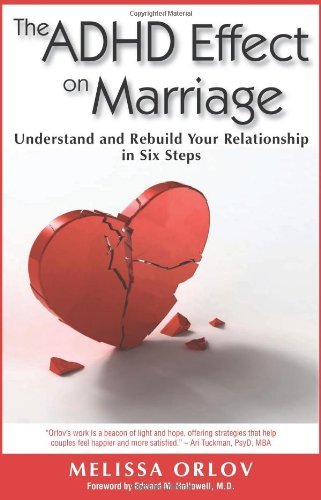
Summary/Review of The ADHD Effect on Marriage: Understand and Rebuild Your Relationship in Six Steps by Melissa Orlov (and Edward M. Hallowell)

By Nicole marino AMFT

Recently, I had the privilege of reading The ADHD Effect on Marriage. I thought the book was well-written and incredibly helpful for marriages consisting of an ADHD and non-ADHD spouse. As a therapist, I found this book enlightening to how ADHD shows up in many relationships, and how it impacts both the ADHD spouse and the non-ADHD spouse. The book was broken down into three main parts: Understanding ADHD in Your Marriage, Rebuilding Your Relationship in Six Steps, and Worksheets/Tools. I am going to go through each part and give a brief summary of what you can expect when reading.

The first part went through the common symptoms of an ADHD diagnosis and how the symptoms present for both the ADHD and non-ADHD spouse. It is important to note that not every relationship has a non-ADHD spouse and an ADHD spouse, but for the purpose of the summary, this is the language and dynamic that was chosen to highlight. This part of the book, from my own experience, allowed me to have a better idea and understanding of what ADHD looks like and how to cultivate empathy for both partners in the relationship who may be suffering. This part went through and explained many statistics and research around ADHD’s impact to a marriage., and the different types of dynamics within a relationship. This part also highlights the rewards of rebuilding a marriage that has been affected by ADHD in a very encouraging, positive, and motivating way. This section goes through symptoms that the non-ADHD spouse may be experiencing and normalizes the impact by including real life examples posted from Melissa Orlov’s interactive blog: adhdmarriage.com.

The next part, and the main part of the book is broken down into six steps to take towards bettering the marriage/relationship. I am not going to fully go through what each section explains but will give a brief overview for reference. To learn more, I highly recommend reading the book to gain more insight, information, understanding, and tools!

1. Cultivating Empathy for Your Spouse: The first step is incredibly important, especially when it comes to healing past resentment. It is key to understand your partner and their experience in the marriage, whether that is the experience of the ADHD spouse or non-ADHD spouse. Being able to empathize with what both partners are going through is a main step towards feeling more connected and on the same page. This also helps when it comes to reactions and responses towards certain triggers or symptoms. Gaining empathy can slow those reactions down to be able to choose a different response to the symptom knowing what the other person is experiencing as well.

2. Addressing Obstacle Emotions: This section better highlights different emotions and responses to symptoms of ADHD specifically from the non-ADHD spouse. For example, anger was a common response to the ADHD struggles in a marriage. The author did a good job including examples to show how anger presents and how it impacts the ADHD spouse most likely on the receiving end of the anger (even though impulsive anger is also another symptom of ADHD). This step discusses how to let go of certain negative emotions/responses as they do nothing productive for the relationship and partner interactions.

3. Getting Treatment for You Both: This step discusses the importance of seeking treatment for both the ADHD spouse and non-ADHD spouse throughout the process of bettering the relationship. For the ADHD spouse, it is helpful to seek professional help to understand symptoms better and gain tools for symptom management. For the non-ADHD spouse, it is important to seek professional treatment to gain support and better coping techniques to manage reactions and emotions towards partner. This step also talks about the choice around medication.

4. Improving Communication: This part walks you through different techniques around having various conversations in a marriage and how it is vital to improve communication in order to improve connection. It is important to listen to one another, validate each other’s experiences, negotiate/compromise respectfully, and increase emotional safety for both partners. This step also goes into how gender plays a role in communication differences, and what to look out for.

5. Setting Boundaries and Finding Your Own Voices: This section goes into personal boundaries, how to identify your own personal boundaries, and how to enforce personal boundaries. The author notes the importance of identifying which boundaries are most important for an individual and where your threshold is for each boundary. With this, you can better understand expectations for each other and what is realistic versus unrealistic to expect. The step then goes into processing how each spouse can respect their partner’s boundaries and create an action plan.

6. Reigniting Romance and Having Some Fun: This step discusses the importance of reintroducing romance and intimacy into your marriage, and how having fun together is a vital part of relationship success. It is important to try and get back to doing fun things together that you use to enjoy at the beginning of the relationship or trying new things together. Having new adventures brings you closer together and reignites that romantic spark and excitement.

The last brief part of the book is a reference chapter full of different tools, techniques, and tips for achieving the six steps. As you read each of the steps, there are different tips and tools specific to what the step’s goal is to help both partners improve on these skills and achieve overall betterment in the marriage/relationship. Not all the tools will be applicable for every person or marriage, depending on the specific struggles you are going through, but you can tailor your toolbox with whatever works best for you and your partner!

Overall, I found this book incredibly beneficial to read not only for my knowledge as a therapist and for my work with my couples/clients, but just to gain a better understanding of how ADHD presents in a person, and a relationship. As someone who has personal relationships with individuals diagnosed with ADHD, I have gained a different perspective on what they may go through every day and how their ADHD shows up for them in their personal relationships. For more information around the book, author, or ADHD in general, you can visit Melissa Orlov’s website at adhdmarriage.com (blog posts included there).

Self Care - Redesigned

By Megan Allcock, AMFT

Self care is a term that has really taken off in the past few years. As the awareness of mental health began to increase, so did the idea of self care. Unfortunately, it has become capitalized on and therefore been reduced to this idea of face masks, candles, and bubble baths. Which are absolutely a PART of self care, but not the whole. Self care is a lifestyle not a “thing” to do. So let’s talk about nine different types of self care and how to incorporate them into your life.

Physical Self-Care is taking care of physical wellness and overall health. Some ways to practice self care for your body physically are getting enough sleep, drinking enough water, moving your body in ways that feel good, making and keeping doctor appointments, eating nutrient dense foods and getting enough fresh air/sunlight.

Emotional Self-Care is taking care of your emotions using empathy and self compassion. Ways to practice this would be journaling, therapy, emotional check ins with yourself, self compassion, releasing energy through music or art, asking for help when you need it and managing your stress.

Social Self-Care is a type of care that involves health family, friend and romantic relationships. It is important when fulfilling this type to spend time with safe people, create and maintain health boundaries, understand and follow through on your emotional battery (balancing alone time and social time depending on individual needs), and asking for support from safe people.

Spiritual Self-Care this care often involves religious beliefs, but is important to remember this involved any activity that nurtures your spirit, soul and allows you to think about something bigger than yourself. Examples include meditation, yoga, going to a place of worship, spending time in nature, prayer, reflecting, etc.

Personal Self-Care prioritizes doing things that honor what you enjoy, need and want. This can include enjoying hobbies, treating yourself (traditional self care of face masks, spa, candle, etc), trying something new, and spending time alone.

Home Environment Self-Care can be a bit of a challenge for some because this can often be out of your control, particularly for kids and teens. This type of self care involved maintaining a safe, functional and comfortable home space. This can look like having physical safety and stability, but also includes having a clean, comfy organized space in whatever form that applies to you.

Financial Self-Care is another challenging one because it often can be somewhat out of people’s control. This means maintaining financial goals and obligations. Self-care in this form often involves saving, researching budget information, paying bills, managing money and budgeting, and getting advice from financial experts (this can be personalized, but also through a podcast or internet source).

Intellectual Self-Care addresses the inner thinker and lifetime learner that exists in all of us. This type of care involves expanding your knowledge, mindset or reasoning. Some examples to foster this include reading, listening to podcasts, watching documentaries, or even researching into a specific topic that interests you.


It is not necessary to do all of these everyday because first, that’s unrealistic and second, you don’t usually need all nine in one day. There will be some moments you are craving intellectual self care, so lean into that. There will be seasons of life that need more of one kind of self care than the other, so again go with that by listening to your brain and body. All you can do is your best!


The Dilemma of Attachment and Authenticity

By Anne DeCore, AMFT

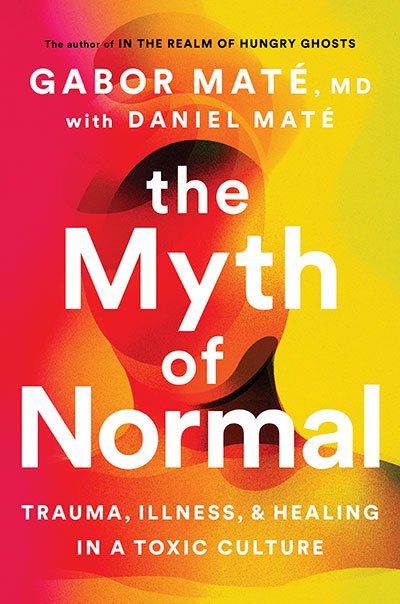
Trauma expert and renowned physician Gabor Maté has a new book out that I highly recommend. He writes poignantly about something that therapists talk about every day with clients. In “The Myth of Normal: Trauma, Illness and Healing in a Toxic Culture,” he states that the most widespread form of trauma in our society is the lower case “t” trauma of “disconnection from the self” in order to have attachment needs met by our parents. Because it is a largely invisible process, unlike upper case “T” trauma, people are often unable to identify how their childhood affected their development. I wanted to share Maté’s explanation of this process on the blog because I think this concept is essential for adults to understand as they self-reflect, and for parents to consider as they raise children.

Attachment is the core drive for proximity, responsiveness, and attunement from our caregivers from infancy and beyond.

Authenticity is the other core need: to be true to oneself, to honor our “gut” feelings, to express our felt emotions.

Maté explains the dilemma in these terms: “What happens if our needs for attachment are imperiled by our authenticity, our connection to what we truly feel?”

Maté tells us that the outcome of that dilemma is pre-determined. When a child senses that being true to their sense-of-self will not be acceptable to a parent, the child will conform to please the parent. We will always “secure our physical or emotional survival by relinquishing who we are and how we feel”. This adaptation is not something we have control over in childhood. Feedback loops with our caregivers over time get wired into our nervous systems and the internal adaptation to privilege inauthenticity becomes second nature. We even tell ourselves that certain traits within our personality are “who we are” instead of what they really are: the “scars of where we lost connection to ourselves”. A few examples of these traits are people-pleasing, hyper-responsibility, stoicism, perfectionism, compulsively charming, compulsively helping. Many of these adaptations in our families-of-origin are reinforced by society as admirable.

These adaptations work for us into adulthood until they don’t. There are costly consequences for repressing one’s thought, feelings and needs. Maté’s book impressively documents the link between inauthenticity and physical illness. Other consequences may be divorce, depression, addiction, and midlife fragmentation. These crises tend to force us to examine the self-concepts we hold. Often, these moments lead us to therapy.

Thankfully, Maté doesn’t leave us hopeless. He writes that developing self-awareness and self-compassion can carry us back toward authenticity. We can re-train the brain and nervous systems to expect both needs, attachment and authenticity, to simultaneously be served in our adult relationships.

Reference:

Maté, G. and Maté D. (2022). A Traumatic Tension: Attachment vs. Authenticity. In The Myth of Normal: Trauma, Illness and Healing in a Toxic Culture; (pp. 96-112). Penguin Random House.

Healing Isn’t Linear

By Megan Allcock, AMFT

With the start of the new year I think there is often this pressure for people to reflect on what they did in the past year and how they want to be “better.” Now there isn’t anything inherently wrong with reflection and wanting to grow, in fact it’s a wonderful aspiration to have. I think sometimes though it doesn’t leave room for the idea that many things in life take more than a year to heal, process and move on from. And even when it is healed, there will always be difficult days or moments of struggle because healing isn’t a linear process.

Let's use asthma as a metaphor here. Typically, asthma is worse in the winter because the dry air can irritate the airways. Now in the summer someone’s asthma will still exist but perhaps isn’t as severe. Similarly, if someone with asthma is working out that could cause a flare up more than sitting on the couch. Now if we think about mental health this way, I think there is a lot more flexibility in the space and grace we can give ourselves to heal.

With trauma and mental health in general, there will be seasons of life where something is more triggering than other times in life. Let’s say for example someone has mostly processed a childhood trauma experience, but they get into a new relationship and their new partner does something that brings up feelings related to their initial trauma. There will be moments that people don’t feel fully healed anymore from that. It doesn’t undo all the work they’ve done, but it really drives home the point that healing isn’t linear. It is OKAY to have time periods that are more difficult than others. There are so many factors that contribute to having bad mental health, so next time you want to be mean to yourself practice reminding your brain that healing isn’t linear and bad days are all a part of the process.

The Science of Self-Compassion Over Self-Criticism

By Anne DeCore, AMFT

Clients are often skeptical when I suggest that choosing to cultivate and listen to an inner voice of self-compassion will move them closer to their goals. They are especially skeptical when I tell them that this is proven to work much better than listening to their harsh inner self-critic.

I fully understand their reaction. Their skepticism surfaces because what I am telling them feels counter-intuitive. Logic tells us that if we push ourselves, we’ll work harder. If we’re kind to ourselves, clients ask me “won’t I get lazy?”

Thankfully we have research to answer this question for us. Research shows us that self-criticism undermines motivation. Here’s why.

We have a reptilian brain that evolved to keep us safe from threats. When we criticize ourselves we activate our body’s fight or flight response system. This means our bodies become flooded with the stress hormones cortisol and adrenaline to ready us for action against a threat. Someone who is constantly judging and criticizing themself experiences high levels of stress. At a certain point it becomes too much: the body and brain have to shut down. This shut down is depression. And depression is not a motivational state of mind. We become the attacker and the attacked all in one.

Thankfully, we are also mammals. And a key feature of being a mammal is the early attachment between mother and infant that creates a safe nurturing environment to grow. Our bodies and brains are programmed to respond to warmth, gentle touch, and soft vocalizations. When we give ourselves compassion, we activate the mammalian caregiver system which releases feel-good hormones oxytocin and opiates. When we give ourselves compassion we reduce our cortisol levels. And, when we feel safe and comforted, we are in our optimal mind state to do our best.

References:

Ted Talk “The Space Between Self-Esteem and Self-Compassion” by Kristen Neff

“Self-Compassion: The Proven Power of Being Kind to Yourself” by Kristin Neff (Harper Collins, 2011)

“Good Morning I Love You” by Shauna Shapiro (Sounds True Press, 2020)

Reparenting Yourself: An Overview

By Kayla Harris, AMFT

Reparenting yourself is an approach to healing that is rooted in inner child-type work. This takes a lot of practice and patience with yourself!

The first task is seeing that we were deserving of love, support, encouragement, etc. from caregivers when we were younger. Think about a younger version of yourself who was really going through a tough time. Imagine them sitting next to you. If you asked them what they need, what would they say? Would they be able to name a caregiver who fulfills these needs?

The second task is recognizing that our caregiver(s) were flawed humans and for whatever reason were not able to give those things to us. Deep down you may have been longing all this time for a parental figure you never got; one you may not ever be able to have because it simply is not possible for them. Over time, we develop schemas about the world, other people, and ourselves.

Examples of negative schemas:

“My father was unreliable so ALL men can’t be trusted”

“I am hard to understand, so I am hard to love”

“When I’m not perfect, I don’t have value. I need to work as hard as possible at everything I do”

“My needs aren’t as important as others’, so I have to do everything for everyone else before doing anything for myself”

These thoughts may have provided a sense of safety and security in our youth, but as fully developed people, they no longer serve us in that way.

The third task of this (my favorite part) is being able to intentionally give ourselves the things that we’ve been craving. As adult, you are likely dealing with the same unmet needs from childhood. NOW you have the agency to choose or ask for support in meeting those needs. Reparenting yourself means you can select reparative experiences for yourself that make you feel good or help you grow.

Some examples of reparenting may be:

  • A person who grew up desiring more physical affection from loved ones may surround themselves with friends who are consistently consensually affectionate.

  • Someone who wanted more encouragement or validation growing up may find it healing to practice positive self-talk and affirmations in the mirror.

  • A child who grew up feeling constantly unsafe may find peace in the ability as an adult to choose a home or neighborhood that makes them feels safe.

Parents: I am not blaming you. An adult child reparenting themselves does not mean you failed. Maybe there were times where you were (for any reason really) unable to give them what they expected and needed from you. I’d be willing to bet that you yourself have unmet needs from your own childhood. This is an intergenerational cycle that you can choose to interrupt. It’s never too late to reparent yourself! You’ve been yearning for things for far too long now and you deserve to give them to yourself!

Extras/Resources:

Article by Bryce Godfrey on impacts of unmet needs and some specifics about how to reparent yourself

YouTube video by Katie Morton, LMFT that provides an overview of reparenting using yourself and/or a therapist

Book by Yong Kang Chan provides a more in-depth look at the process of reparenting


Mindfulness and Communication: A Powerful Combination

By Nicole Marino, AMFT

What is Mindfulness? Mindfulness is a technique in which one focuses their full attention only on the present moment, experiencing thoughts, feelings, and sensations without judgement. When we communicate with others, often our minds wonder to other things going on such as what we want to say next, what we want to do later that day, or what we want to eat for dinner. Mindfulness keeps us in the present moment and fully engaged in a conversation, while allowing thoughts and feelings to pass through. Without being mindful, we often are not fully responding or communicating in a thoughtful way. This can often lead to arguments or disagreements with a partner for example, if they are feeling unheard or misunderstood. Being mindful allows the other person to feel listened to, understood, prioritized, and overall valued. Mindfulness also can strengthen a relationship and bring people closer together when both individuals can put their devices down, focus on what is happening right in front of them, and fully connect.

What we all say is important, and we want to feel that the person we say those things to feels the way we do. We want to be shown that we matter, and our opinions, thoughts, and feelings also matter. We can prove that importance by exhibiting curiosity and asking questions as a result of being completely present and focused on what the other person is saying. If you notice that staying in the present moment in conversations or in general is often difficult, and that your mind strays away from the present moment, then consider practicing meditation or yoga. Both are great “exercises” to learn and adopt better mindfulness-based skills. Allow yourself the opportunity to see the powerful combination of mindfulness and communication in your everyday conversations and relationships.