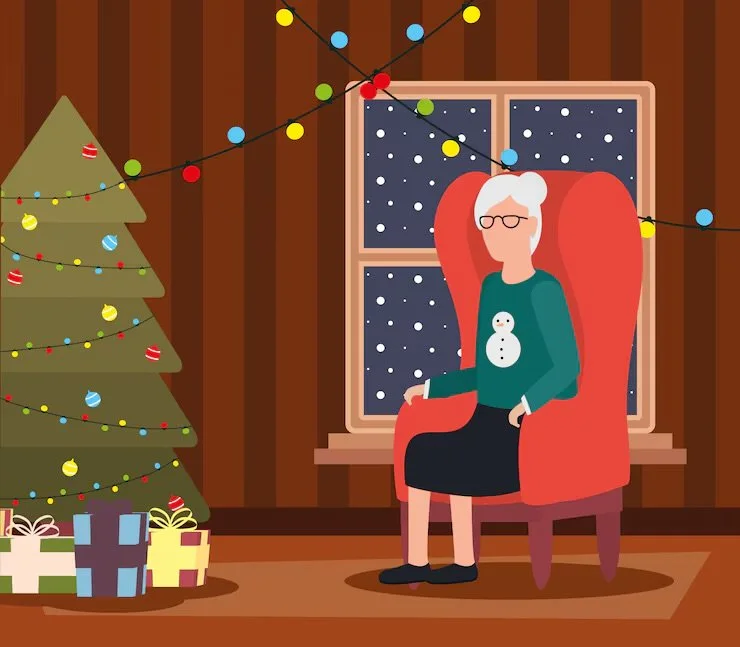
Navigating the Holidays When Someone is Missing

By Caroline Neal, lmft

The holidays bring immense pressure to "be joyful," but when you are grieving, this expectation can collide with your reality. If you are dreading the weeks ahead, please know that your feelings are valid. This season is not about getting over your grief, but about finding practical ways to manage it while navigating the constant reminders of your loss.

Anticipating and Managing Triggers

Grief is intensified by the rituals and traditions of the season. Knowing the common triggers can help you prepare:

Sensory Overload: Be mindful of specific scents, songs, or sights that instantly transport you back to painful memories.

The "Firsts": The first time you experience a key holiday event (dinner, gift exchange) without your loved one will likely be the hardest; be extra gentle with yourself on those days.

Social Pressure: Anticipate difficult questions from well-meaning relatives and have a simple, planned response ready.

Essential Strategies for Self-Protection

Your primary goal is to conserve your emotional energy and practice self-compassion.

Practice the Power of 'No': You don't owe anyone an explanation or your presence. Limit attendance at events or skip painful traditions entirely.

Plan Your Escape Route: Drive yourself so you can leave an event when you need to. Identify a Grief Buddy who knows you might need a brief retreat or a distraction.

Schedule Your Grief: Designate specific time slots each week to intentionally look at photos, cry, or feel sad. This prevents the grief from ambushing you during social events.

Allow Joy Without Guilt: If you laugh or feel a moment of peace, accept it. Joy is not a betrayal of your loved one; it is a necessary emotional reprieve.

Honoring and Remembering

Instead of trying to ignore the absence, create new rituals that actively honor your loved one's memory.

Create a Tribute: Place a candle, a favorite object, or a photo on the table to acknowledge their place and absence.

Share a Memory: Dedicate a few minutes during a gathering for family members to share a short, positive memory of the person who is missing.

Act of Service: Transform sadness into tribute by making a donation or volunteering for a cause your loved one cared about.

Seeking Support

If the emotional weight feels overwhelming, remember that seeking help is a sign of strength. Therapy offers a safe space to process complex emotions and helps you distinguish between normal grief and complicated grief, ensuring you get the support needed to navigate the intensity of the season.

This holiday season, give yourself permission to be exactly where you are.

If you're finding the emotional burden too heavy to carry alone, please reach out to schedule a time to talk.

Ambiguous Loss: What Is It?

By Anne Decore, lmft

All of us have or will face situations of ambiguous loss.

“Rarely is there absolute presence - or absence - in any human relationship” writes Pauline Boss, the leading expert on ambiguous loss, in her book “Loss, Trauma, and Resilience: Therapeutic Work with Ambiguous Loss”.

Ambiguous loss is felt when physical presence and psychological presence don’t align.

The first type of ambiguous loss speaks to situations where a loved one is physically missing but kept psychologically present. War, terrorism, and natural disasters are catastrophic examples of this type of ambiguous loss. A child’s experience of a parent who leaves or is absent due to divorce, work relocation, family members emigrating, and incarceration are also examples of this kind of loss.

The second type of ambiguous loss is often described with the simplified language of “there but not there”. Dementia, Alzheimer’s, brain injury, addiction, depression: these are quite recognizable examples of a person being present but not psychologically available.

Psychologists now understand that the experience of this type of ambiguous loss emerges from common circumstances too (and feels no less profound):

a partner or parent always on their phone; a partner/parent relentlessly preoccupied with work; stepparent-child relationships; interactions with an ex-spouse because of co-parenting; lack of acceptance of one’s identity by family or community are just some examples.

In this type of loss, emotional processes freeze. Roles and statuses become confusing. People don’t know how to act.

All of us have or will face situations of ambiguous loss. It’s important to apply language to the process in order to make the invisible visible. I hope that by sharing this concept and the language of “ambiguous loss” it can become the first step to feeling seen, connecting with others, finding support, and growing resilience.

Reference: Boss, Pauline. Loss Trauma and Resilience. WW Norton & Company, 2006

Grief is like a Tail

By Kayla Harris, MA, AMFTPhoto by Liza Summer from Pexels

By Kayla Harris, MA, AMFT

Photo by Liza Summer from Pexels

I often think of grief like a tail.
Ever-present to you, but invisible to others.

When you experience a tough loss, your tail may feel prickly and sore all the time.

It is always on your mind just how much it pains you, how much it keeps you from enjoying your life.

Every once in a while, you pinch it in a door behind you or someone steps on it.

And it's not their fault; they did not know it was there because they cannot see it.

And yeah, maybe you've mentioned that you have this tail and that it throbs (around the holidays, for example).

However, other people will forget that it is there and will still ask you things like, "What are you doing for Father's/Mother's Day?" and OUCH.

Even people who care deeply for you will do this.

The thing is, they do not have to live with your tail or make space for it, so they'll quickly forget you have to go through life with it.

Other people trip on it and step on it, songs and movies will play that will remind you of hurts, even your mind will replay memories that bring everything back.

In those moments, it may feel like a part of you was just jammed in a car door or like you bumped your head on a low ceiling.

It's as if the central nerve of your tail is tied directly to your heart, throat, or tear ducts.

You may act out in anger or sadness that onlookers won't immediately understand.

The trick is to acknowledge when your tail is hurting and share your feelings with someone you trust.

The more you talk about your losses and how they've impacted you, the more resilient your tail becomes.

What starts as raw and scabby later becomes soft and durable.

As the losses pile on over the years, your tail may feel fresh and vulnerable all over again.

Still, when you care for yourself and make room for the aches, you may be comforted in feeling your grief tail as a part of you and not all of you.